Anna Maria Island packs three separate beach towns onto seven miles of sand, and picking the wrong one first means burning your afternoon circling for parking instead of swimming. Most guides list every restaurant on the island without telling you which beach has the best sunset, which pier is worth the walk, or how to get around once you’ve found a spot for the car. This guide breaks down exactly where to go in Anna Maria City, Holmes Beach, and Bradenton Beach – the free trolley route, the real standout beaches, and the spots that keep locals coming back.
Getting Oriented: Three Towns and One Free Trolley
Anna Maria Island covers three distinct towns, and understanding the layout saves you from a lot of confused backtracking. Anna Maria City sits at the north end, the smallest and quietest of the three, still built around a fishing-village feel. Holmes Beach fills the middle stretch with most of the island’s shopping and a wide run of family rentals. Bradenton Beach anchors the south end near the Cortez Bridge, close to Coquina Beach and the busiest restaurant scene on the island.
Drivers reach the island from the mainland over the Anna Maria Island Bridge from Bradenton or the Cortez Bridge from Cortez, both landing near the south end. Coming from Tampa or St. Petersburg, most people cross the Sunshine Skyway and follow Cortez Road straight onto the island. If you’re weighing a day trip from Orlando, know that Anna Maria Island sits far enough west that it works better as an overnight than a same-day run.
Use the Free Trolley, Skip the Parking Hunt
Manatee County Area Transit runs a free trolley the length of the island, stopping near the main beach accesses in all three towns. It solves the island’s biggest daily headache: paid lots and metered street spots that fill up by mid-morning in season. Park once near your rental or a free lot, then hop the trolley to Bean Point, Bridge Street, or Coquina Beach without moving your car again. Service runs at intervals throughout the day, so build a little buffer into your plans rather than timing an exact departure.

The Best Beaches on Anna Maria Island
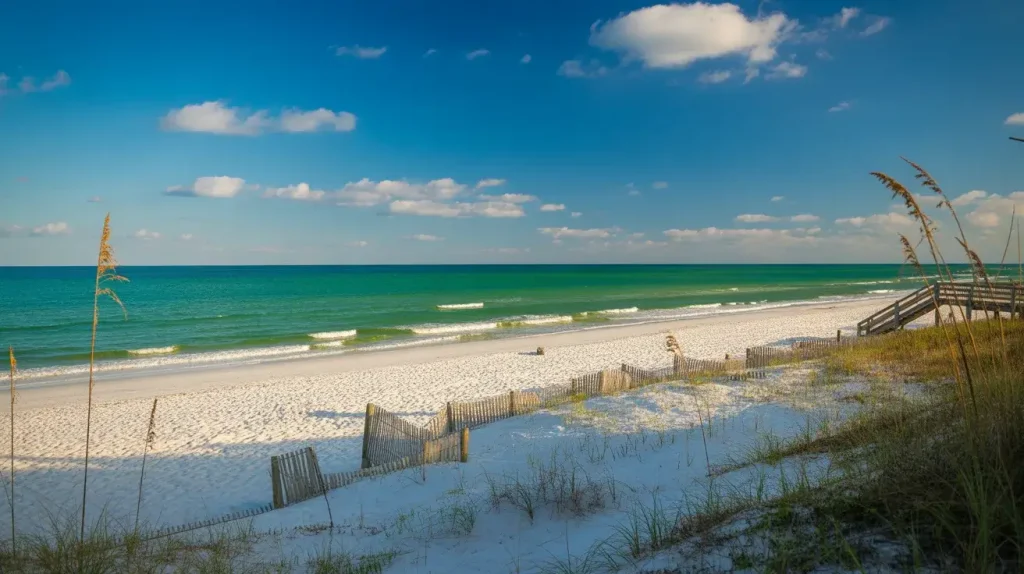
Every beach on the island shares the same soft, quartz-white sand, but each stretch has its own personality. Some are quiet and residential, some are lined with restaurants, and one sits right at the point where the Gulf meets Tampa Bay. Knowing the difference before you pack the cooler saves a wasted trip.
Bean Point
Bean Point sits at the far northern tip of Anna Maria City, where the beach curls around to face both the Gulf of Mexico and the mouth of Tampa Bay. The currents here run calmer on the bay side, which makes it a good pick for families with young kids who want to wade rather than fight waves. Access is limited to a handful of street-side spots, so arrive early or walk in from a nearby public lot. The payoff is one of the least crowded stretches of sand on the whole island, even in season.
Coquina Beach
Coquina Beach runs along the south end near Bradenton Beach and solves the parking problem that plagues the rest of the island – it has a large dedicated lot right off Gulf Drive. The beach itself is wide and shallow, with lifeguards on duty, picnic pavilions, and a bayside section across the street for calmer water. It’s the easiest beach on the island for a first-time visitor to just show up and settle in without scouting a spot in advance.
Manatee Public Beach
Manatee Public Beach, also called Manatee Beach, sits in Holmes Beach and works well as a middle-ground option. It has a snack bar, showers, and a metered lot that fills fast on weekends, so plan to arrive before mid-morning. The beach connects directly to a stretch of shops and casual restaurants, which makes it easy to turn a beach day into a beach-and-lunch day without moving the car.
Bridge Street Pier and Bradenton Beach After Dark
Bridge Street is the closest thing Anna Maria Island has to a downtown, and it centers on the historic Bridge Street Pier. The pier extends out over the water at the south end of the island and has drawn anglers and sunset-watchers for generations. Walk to the end at dusk and you’ll find a crowd doing exactly that – no cover charge, just a rail to lean on and a view west over the Gulf.
The three or four blocks around the pier hold most of Bradenton Beach’s dining and nightlife. Restaurants here range from casual seafood shacks with paper menus to a few spots with live music most nights in season. It’s a small enough strip to walk end to end in fifteen minutes, which makes bar-hopping or restaurant-hopping genuinely practical here in a way it isn’t on bigger barrier islands.
Compare that to another laid-back beach town with a compact main strip, and the family resemblance is obvious. Both towns build the evening around a pier instead of a strip of high-rise hotels, and both stay walkable enough that you never need to move your car once you’ve found dinner. That’s the trade-off Anna Maria Island makes on purpose – fewer bars, fewer neon signs, more time actually looking at the water.
Outdoor Activities Beyond the Beach
The Gulf side of the island gets the attention, but the bay side is where most of the outdoor activity actually happens. Calmer water, protected mangroves, and easy access from Bridge Street make the bay side the default for kayaking, paddleboarding, and fishing trips alike. Treat the Gulf beaches as the place to swim and the bay side as the place to explore.
Kayaking and Paddleboarding
The calm water on the bay side of the island makes it a solid spot for kayaking and stand-up paddleboarding, with several outfitters renting gear by the hour near Bridge Street and Coquina Beach. Beginners can stick close to shore and still see mullet jumping and the occasional dolphin fin. Guided tours run through the mangrove tunnels on the bay side for anyone who wants a narrated version rather than a self-guided paddle.
Robinson Preserve
Robinson Preserve sits just off the island in Bradenton, a few minutes over the bridge, and it’s worth the short drive. The preserve covers restored coastal wetlands with miles of paved trails, a kayak launch, an observation tower, and mangrove creeks that connect out to Tampa Bay. It’s free to enter and makes a good half-day add-on if you want a break from straight beach time without leaving the area.
Fishing Charters
Anna Maria Island runs on fishing as much as it runs on tourism, and charter captains work out of marinas in Cortez and Bradenton Beach year-round. Half-day inshore trips target snook, redfish, and trout in the flats and mangrove edges around the island. Full-day offshore charters head out for grouper and snapper for anyone who wants to bring dinner home rather than catch-and-release.
Cortez Village
Cortez sits just across the bridge from Bradenton Beach and holds one of the last working fishing villages left on Florida’s Gulf Coast. Weathered docks, fish houses, and shrimp boats still run daily out of the same harbor that’s supported the town for generations. It’s worth a short detour if you want fresh seafood straight off the boat or a look at what the whole region looked like before tourism took over.

Family-Friendly Things to Do
Anna Maria Island works well for families largely because nothing here requires a long drive or a big production. The beaches stay shallow and calm in most spots, the trolley removes the stress of parking with kids and gear in tow, and Bridge Street has enough casual restaurants that picky eaters always find something. The Anna Maria Island Historical Society Museum in Anna Maria City gives younger kids a low-key, air-conditioned break from the sun for an hour.
Bring bikes if you have them, or rent them on the island – flat roads and low traffic make the whole stretch rideable for kids old enough to handle a beach cruiser. Sunset watching at the pier or Bean Point doubles as a free, built-in evening activity that doesn’t require reservations or a babysitter. For families cross-shopping other Gulf Coast options, Destin offers a bigger, more built-up version of the same beach-town formula, while Anna Maria Island stays smaller and slower on purpose.
Where to Eat on Anna Maria Island
Seafood dominates the menu across all three towns, and most of the best spots sit within walking distance of the water. Bradenton Beach and Bridge Street hold the highest concentration of restaurants, from raw bars to sit-down waterfront dining with a dock for boats to pull up. Holmes Beach fills in with casual lunch counters and coffee shops geared toward people coming straight off the sand.
Anna Maria City keeps its dining scene small and low-key, in line with the town’s quieter character – think a handful of family-run spots rather than a restaurant row. Grouper sandwiches show up on nearly every menu on the island and function as the unofficial local dish. Reserve a table in advance during peak season, especially anywhere with outdoor waterfront seating at sunset.
Best Time to Visit Anna Maria Island
Spring, from March through May, brings warm days, lower humidity, and water temperatures comfortable enough for swimming without the peak-summer crowds. Fall, especially October and November, offers a similar payoff with fewer families on spring break and often better hotel rates. Summer stays busy and hot with the warmest Gulf water of the year, which matters if swimming is the whole point of the trip.
Winter draws snowbirds escaping colder climates up north, and the island stays lively without ever feeling as packed as summer weekends. Hurricane season runs June through November, so keep an eye on the forecast if you’re booking a late-summer or fall trip. Compared to Florida Keys destinations further south, Anna Maria Island runs slightly cooler in winter, which locals consider a fair trade for easier access from Tampa.
Practical Tips for Your Trip
No High-Rises, On Purpose
Anna Maria Island has fought hard to keep building heights low, and the result is a skyline of small cottages, duplexes, and low-rise motels rather than towering resorts. That choice shapes the whole feel of the island – more porches, more visible sky, fewer elevators between you and the beach. It’s part of what separates Anna Maria Island from more developed stretches of Florida coastline.
Parking
Parking is the single biggest daily friction point on the island, especially at Manatee Public Beach and along Gulf Drive in season. Coquina Beach has the most reliable lot capacity, so use it as a backup plan if your first choice looks full. Whenever possible, park once and use the free trolley rather than moving your car between beaches.
Best Sunset Spots
Bean Point and the end of Bridge Street Pier both deliver unobstructed western views over the Gulf without a building or hotel deck in the way. Coquina Beach’s wide, open stretch of sand gives you more room to spread out if the pier crowd isn’t your scene. Get there twenty minutes before sunset in season, since both spots fill in fast once the sky starts turning color.
FAQs
Is Anna Maria Island good for a day trip from Tampa?
Yes. The drive from Tampa runs about an hour depending on traffic, making it a realistic day trip if you leave early and pick one town to focus on rather than trying to see all three. Bradenton Beach and Coquina Beach sit closest to the bridges, which cuts down on driving time once you arrive.
Do I need a car on Anna Maria Island?
You need a car to get to the island, but you don’t need one once you’re there if your rental sits near a trolley stop. The free trolley covers the full length of the island frequently enough to handle beach hopping, dinner runs, and sunset trips without ever moving your car. Bikes are a solid backup for shorter distances between stops.
Which town should I stay in – Anna Maria City, Holmes Beach, or Bradenton Beach?
Choose Anna Maria City for quiet and a slower pace, Holmes Beach for a central location near shopping and Manatee Public Beach, or Bradenton Beach for nightlife, dining, and easy access to Bridge Street Pier and Coquina Beach. Families who want to walk to restaurants at night tend to prefer Bradenton Beach. Couples looking for quiet mornings tend to prefer Anna Maria City.
Is Anna Maria Island expensive compared to other Florida beach towns?
Rental rates run comparable to other popular Gulf Coast spots and rise sharply during spring break and summer. Booking in spring shoulder season or fall typically brings better rates on the same properties. Eating at casual counter-service spots rather than waterfront sit-down restaurants keeps daily food costs down without sacrificing the seafood-heavy local menu.
Can I bring my dog to the beaches on Anna Maria Island?
Most of the main public beaches, including Coquina Beach and Manatee Public Beach, do not allow dogs on the sand, though some have designated dog-friendly sections or nearby off-leash areas. Check current rules for the specific beach before you go, since policies vary by town and can change seasonally. Bridge Street and the surrounding neighborhoods are generally dog-friendly for walking, even where the beach itself isn’t.
Start With One Beach, Not the Whole Island
Trying to hit Bean Point, Coquina Beach, and Bridge Street Pier all in one day is how first-time visitors end up spending more time parking than swimming. Pick the beach that matches what you actually want – Bean Point for quiet water, Coquina for easy parking and lifeguards, Bridge Street for a walkable evening – and build the rest of the day around it using the free trolley. You can always see the other two towns tomorrow; you can’t get today’s beach time back.
Navigating Island Logistics and Common Pitfalls
While the trolley is a convenient asset, relying on it entirely requires understanding its limitations. During peak holiday weekends or major local events, the trolley can experience significant delays due to heavy traffic on Gulf Drive. If you are staying in the northern reaches of Anna Maria City and have a dinner reservation in Bradenton Beach, allow at least 45 minutes for transit. Many visitors make the mistake of waiting until the last minute to head to their destination, only to find the trolley full or stuck in gridlock.
Mistakes to Avoid:
- Ignoring Tides: At high tide, particularly at Bean Point, the shoreline shrinks significantly. Check local tide charts to ensure you have enough dry sand for your setup.
- Underestimating Sun Exposure: The white quartz sand is highly reflective. Even on partially cloudy days, the UV intensity is strong. Always pack more sunscreen than you think you will need, as local shops near the beach often charge a premium for basic supplies.
- Over-packing for the Beach: Because parking is limited, you may end up parking several blocks away from your intended beach access. If you are traveling with children, bring a cart with large, all-terrain wheels to navigate the sand easily.
Practical Steps for a Smooth Visit
- Download the Transit App: Use the official Manatee County Area Transit tracking tools to monitor trolley locations in real-time. This prevents unnecessary standing in the sun.
- Establish a Home Base: If you are on a day trip, choose one town to park in and stick to it. Moving your vehicle between Anna Maria City, Holmes Beach, and Bradenton Beach is the fastest way to ruin your afternoon.
- Check Beach Flags: Look for the colored flags at public beach entrances. These indicate water conditions and rip current risks. Red flags mean high hazard, while yellow indicates moderate surf.
Essential Planning for Your Stay
If you are planning to visit during the peak season, which generally aligns with school breaks and the winter migration of seasonal residents, booking your accommodation and dining well in advance is non-negotiable. Many of the most popular waterfront restaurants do not accept traditional reservations, operating on a first-come, first-served basis. If you have your heart set on a specific view for sunset, arrive at the restaurant by mid-afternoon to put your name on the list.
For those looking to explore beyond the sand, keep in mind that the island is strictly residential in many areas. Respect private property boundaries and noise ordinances, especially in the quiet northern neighborhoods. The island’s charm relies on the balance between tourism and the preservation of its small-town character, so keeping foot traffic on designated paths and staying off private dunes helps protect the fragile coastal ecosystem that makes the island special.

Harry Hatch is a travel writer at Best Tips for Traveling, sharing practical destination guides, itineraries, travel planning advice, and useful tips to help travelers plan better trips.